
IRA Planning Hub
We help families navigate evolving retirement account rules through continuous learning, disciplined planning, and fiduciary judgment.
Advanced Retirement Planning Guided by Continuous Learning
Individual Retirement Accounts (IRAs) or workplace plans often represent a substantial portion of a family's retirement savings. While the investment choices inside an IRA are important, many of the most significant planning decisions involve distributions, taxes, beneficiaries, Roth conversions, and coordinating multiple retirement accounts over time.
Tax law governing IRAs continues to evolve, particularly following the SECURE Act and SECURE 2.0. Decisions that appear straightforward can have long-term tax consequences for both account owners and beneficiaries.

A Commitment to Technical Excellence
Our President, Dick Hewitt, is a member of Ed Slott's Elite IRA Advisor Group, a nationally recognized organization dedicated to advanced retirement account education. Membership provides ongoing access to specialized training, legislative updates, technical resources, and collaboration with professionals who focus extensively on retirement account planning.
For us, this is not a designation to display. It reflects our belief that continuous learning is an essential part of being a fiduciary. We invest in advanced education because our clients depend on us to help them navigate increasingly sophisticated financial decisions with sound judgment and current knowledge.
How Does IRA Planning Benefit Our Clients?
Retirement account rules have become increasingly complex as Congress has updated tax law through legislation such as the SECURE Act and SECURE 2.0. This is why managing distribution rules, beneficiary requirements, and Roth conversion strategies with the idea of account simplification is vital for both retirees and future heirs.
Our goal is to simplify these rules so our client families can make informed decisions with greater confidence.
Where IRA planning makes the biggest difference
Developing a thoughtful withdrawal strategy can help preserve retirement assets while managing taxes throughout retirement.
- Coordinate IRA withdrawals with Social Security, pensions, and taxable investment accounts.
- Evaluate Required Minimum Distribution (RMD) obligations and available planning opportunities before distributions begin.
- Consider how annual withdrawals affect taxable income, Medicare IRMAA surcharges, and taxation of Social Security benefits.
- Balance current income needs with preserving assets for future years and potential beneficiaries.
Converting Traditional IRA assets to a Roth IRA may create future tax advantages, but timing matters.
- Consider whether a Backdoor Roth IRA strategy may be appropriate for higher-income earners who exceed the Roth IRA income limits.
- Evaluate whether converting assets during lower-income years may reduce lifetime taxes.
- Consider how conversions affect current tax brackets, Medicare premiums, and other income-based provisions.
- Qualified Roth IRA distributions to beneficiaries are generally income tax-free, making Roth assets attractive for many estate plans.
Recent legislation has significantly changed how many beneficiaries must distribute inherited retirement accounts.
- Understand the rules that apply to Eligible Designated Beneficiaries, Non-Eligible Designated Beneficiaries, charities and other situations.
- Evaluate the impact of the SECURE Act's 10-year distribution requirements where applicable.
- Coordinate inherited IRA distributions with the beneficiary's own tax situation.
- Review beneficiary designations regularly to ensure they remain consistent with estate planning objectives.
Many families accumulate multiple retirement accounts over decades of employment.
- Review opportunities to consolidate eligible retirement accounts where appropriate.
- One IRA distribution can satisfy the combined RMD for multiple Traditional IRAs when IRS rules permit (which is not true for many workplace plans, which is more reason to consolidate and simplify accounts).
- A streamlined account structure often makes it easier for surviving spouses and beneficiaries to understand, administer, and distribute inherited retirement assets.
- Review beneficiary designations after rollovers or account consolidations to ensure they remain current and consistent with your estate plan.
IRA Tax Reporting: Rules & Forms to Know
We referenced the myriad rules and regulations surrounding IRA accounts. We've simplified it into a digestible table with some of the more common rules and tax forms.
Common IRS Tax Forms for IRAs
| IRS Form | Purpose | When You May Receive It |
|---|---|---|
| Form 1099-R | Reports distributions from IRAs and retirement plans | After taking withdrawals, Roth conversions, rollovers, or other distributions |
| Form 5498 | Reports IRA contributions, rollovers, Roth conversions, and year-end account value | Typically issued after tax filing season for informational purposes |
| Form 8606 | Tracks nondeductible IRA contributions and reports taxable portions of Roth conversions and distributions | Filed with your tax return when applicable |
Common IRA Rules to Know
| Rule | Applies To | What Is It? | How to Address | IRS Form(s) |
|---|---|---|---|---|
| Traditional IRA Deductibility | Traditional IRA Contributions | You get a tax deduction when contributing to a Traditional IRA. This tax benefit is sometimes phased out or eliminated completely depending on your income. | Income < annual limit = Deduction. Income > annual limit = No deduction, file Form 8606 | Form 1040, Form 8606 |
| Non-Deductible Contributions | Traditional IRA Owners | If your income is too high, you can still contribute to a Traditional IRA, you just don't get the deduction (i.e. after-tax) | File Form 8606 to track after-tax monies in a pre-tax account. | Form 8606 |
| Roth IRA Income Limits | Roth IRA Contributors | Higher-income earners may not qualify for direct Roth IRA contributions. | Consider a Backdoor Roth IRA strategy if appropriate. | Form 5498 |
| Required Minimum Distributions (RMDs) | Traditional IRA Owners | Uncle Sam has never received his tax revenue from your pre-tax account. Therefore, you're required to withdraw a minimum amount each year after reaching the applicable IRS age. | Review RMD requirements annually and coordinate withdrawals. | Form 1099-R |
| Beneficiary Designations | All IRA Owners | IRA beneficiary designations control how retirement assets are transferred, not wills or trusts. | Review beneficiaries after major life events and account changes. | N/A |
| Roth Conversions | Traditional IRA Owners | You can convert money from a Traditional IRA to a Roth IRA. The amount you convert is generally taxable in the year of conversion. | Allows you to better manage taxes in retirement and pass on tax-free assets to heirs. | Forms 1099-R & 5498 |
| Qualified Charitable Distributions (QCDs) | Eligible Traditional IRA Owners | Direct charitable gifts may satisfy all or part of an RMD. | Coordinate QCDs with annual charitable giving and distribution planning. | Form 1099-R |
A Continuing Commitment to Education
IRA rules continue to evolve as Congress updates retirement legislation and the IRS issues new guidance. Remaining current requires ongoing education and careful attention to changing regulations.
Our commitment to ongoing IRA education reflects the same philosophy that guides every aspect of our planning process: remaining current on evolving tax law so we can provide thoughtful, well-informed guidance to the families we serve.
Slott Reports
These reports cover current, single subject issues with IRAs and company retirement plans.
September 2026
- Part 2: Who Should Not Convert To A Roth IRA September 14, 2026
- An Update On State Law Tax Treatment Of Trump Accounts September 9, 2026
- Qualified Disaster Distributions September 2, 2026
August 2026
- Who Should Convert To A Roth IRA Part 1 August 31, 2026 August 31, 2026
- IRS Issues Guidance On Permissible Trump Account Investments August 26, 2026 August 26, 2026
- Avoid These 4 Common IRA Trust Mistakes August 24, 2026 August 24, 2026
- Roth Distribution Rules IRAs vs Plans August 19, 2026 August 19, 2026
- The IRS Issues Guidance On Trump Account Employer Contributions August 17, 2026 August 17, 2026
- The Look Through Rule For Trusts August 12, 2026 August 12, 2026
- Creditor Protection For Your Retirement Accounts August 5, 2026 August 5, 2026
- How Your Spouse Can Impact Your Traditional IRA Deduction August 3, 2026 August 3, 2026
July 2026
- 530A Trump Accounts The Compounding Mathematical Facts July 29, 2026 July 29, 2026
- Not Child's Play How The Kiddie Tax Works July 27, 2026 July 27, 2026
- What You Need To Know About The Still Working Exception July 22, 2026 July 22, 2026
- QCD Code Y Optional Again In 2026 July 20, 2026 July 20, 2026
- How Plan Loans Work July 15, 2026 July 15, 2026
- The Ghost Life Rule Explained July 13, 2026 July 13, 2026
- Treasury Announces Initial Trump Account Investment Options July 6, 2026 July 6, 2026
- IRS Provides Fix For Trump Account Gift Tax Issue July 1, 2026 July 1, 2026
June 2026
- The Law Of The Plan Is The Law Of The Land June 29, 2026 June 29, 2026
- Breaking The Barriers To Access Your Retirement Plan Funds While Working June 24, 2026 June 24, 2026
- Form 8606 And The Pro Rata Rule Not The End Of The World June 17, 2026 June 17, 2026
- Accessing 401K Funds While You're Still Working June 15, 2026 June 15, 2026
- Roth IRA Conversions Do Not Count For Roth IRA Contribution Eligibility June 8, 2026
- What In The World Is Modified Adjusted Gross Income (MAGI), and Why Does It Matter? June 3, 2026
- Five Things To Know About The Five-Year Rule On Converted Roth Funds June 1, 2026
May 2026
- 529-to-Roth: Still No News On 15-Year Clock May 27, 2026
- The "Required Beginning Date" vs. "First RMD Year" Confusion May 20, 2026
- Reporting a Recharacterization May 13, 2026
- A Cheat Sheet For Retirement Account Beneficiary RMDs May 11, 2026
- The Once-Per-Year Rollover Rule: Multiple Deposits vs. Multiple Distributions May 6, 2026
- The Simultaneous QCD/RMD Transaction May 4, 2026
April 2026
- Grandparents Should Be Very Careful Before Opening Trump Accounts April 29, 2026
- 5 Steps To Spring Clean Your IRA April 27, 2026
- 6 Required Questions To Determine An IRA Beneficiary Payout Structure April 22, 2026
- How Will States Tax Trump Account Contributions April 20, 2026
- How An Excess IRA Contribution Can Happen To You April 15, 2026
- The Strange RMD Rules For Ex Spouses After A Divorce April 8, 2026
March 2026
- 8 Rules To Help Navigate The Multiple Plan Contribution Limits March 30, 2026
- Young Spouse, Spousal Rollover, Year Of Death RMD …. And A Penalty March 23, 2026
- Moving The Clocks Ahead And Reviewing The Roth IRA 5 Year Clocks March 18, 2026
- 5 Reasons To Roll Over Your Retirement Funds To An IRA March 16, 2026
- Fatal Error Mistakes That Cannot Be Fixed Part 2 March 11, 2026
- Rolling Over Your Retirement Plan- Here Are 5 Things To Know About Your RMD March 4, 2026
- Fatal Error Mistakes That Cannot Be Fixed Part 1 March 2, 2026
February 2026
- New Trump Account Developments February 25, 2026
- 5 Tips For Making Your 2025 Roth IRA Contribution February 23, 2026
- How In Plan Roth Conversions Work February 16, 2026
- Don’t Miss This Rule That Allows Smaller RMDs February 11, 2026
- Three Basic IRA Rules That Must Be Understood February 9, 2026
- You’ll Need To Report Certain IRA and Retirement Plan Distributions Differently On This Year’s Form 1040 February 4, 2026
- Naming A Trust For A Minor As IRA Beneficiary February 2, 2026
January 2026
- A Different Fix Excess IRAs vs 401K Plan Contributions January 28, 2026
- How The Vesting Rules Work For Company Retirement Plans January 26, 2026
- Spousal IRA Contributions January 21, 2026
- Inherited Roth IRAs And Successor Beneficiaries January 19, 2026
- Making Sense Of The Roth 401K to Roth IRA Rollover Rules January 14, 2026
- How Your RMD Statement Can Help You January 12, 2026
- 2026 Here We Go Again January 7, 2026
- Coming Soon The Thrift Savings Plan Will Start Offering In Plan Roth Conversions January 5, 2026
December 2025
- Grinch Gifts Penalties And Missed Opportunities December 29, 2025
- The Wonderful Magical Form 5498 December 17, 2025
- IRS Addresses Unanswered Questions About Trump Accounts December 15, 2025
- New IRS Guidance On Trump Accounts Is Released December 10, 2025
- Yes RMDs Apply To Inherited Roth IRAs But…. December 8, 2025
- The Crazy Complication 2026 SIMPLE IRA Plan Elective Deferral Limits December 3, 2025
November 2025
- IRA And Retirement Plan Dollar Limits Increased For 2026 November 24, 2025
- The Tricky Still Working Exception After Death November 17, 2025
- When Can I Take An In Service Withdrawal From My 401K November 12, 2025
- 5 Times When You Should Not Name Your Spouse As Beneficiary November 10, 2025
- IRAs and 401K Plans Different Rules, Different Worlds November 5, 2025
- 8 Questions Answered About The New Mandatory Roth Catch Up Rule November 3, 2025
October 2025
- New Code Y Is Optional For 2025 QCDs October 29, 2025
- Why The Once Per Year Rollover Rule Is Often Misapplied October 22, 2025
- IRA Trick Or Treat October 20, 2025
- Good Reasons To Name A Trust As IRA Beneficiary October 15, 2025
- State Tax Treatment Of 529 To Roth IRA Rollovers October 13, 2025
- 5 Steps To Tax Free Roth IRA Distributions October 8, 2025
- 401K RMD Rollover Problems….And A Last Minute Save October 6, 2025
- Another Way To Lose IRA Bankruptcy Protection October 1, 2025
September 2025
- IRA Distribution Confusion September 24, 2025
- IRS Confirms Effective Date Of Mandatory Roth Catch Up Rule September 22, 2025
- 5 Things You Need To Know About 2025 Qualified Charitable Distributions September 17, 2025
- Participation In Multiple Retirement Plans September 15, 2025
- The Still Working Exception And December 31 Retirement September 10, 2025
- Do QCDs Actually Reduce AGI? September 3, 2025
August 2025
- Avoiding The 10% Early Distribution Penalty For Certain Hardship Withdrawals August 27, 2025
- Tapping An ESA For Back To School Expenses August 25, 2025
- In ERISA Retirement Plans, Spouse Beneficiaries Rule August 18, 2025
- OBBBA Impact On HSAs August 13, 2025
- 5 Random Retirement Account Trivia Questions August 11, 2025
- Six Unanswered Questions On Trump Accounts August 6, 2025
- Mr. T I Pity The Fool Who Misses Their RMD August 4, 2025
July 2025
- Reporting A Recharacterization July 30, 2025
- Roth IRA VS Roth 401K Which Is Better July 28, 2025
- Trump Accounts A New Hot Bombshell Enters The Tax Advantaged Account Villa July 23, 2025
- How Trump Accounts Work July 16, 2025
- 3 Retirement Account Takeaways From OBBBA July 14, 2025
- OBBBA No IRA Changes But More Roth Conversions July 9, 2025
- How Company Plan Loans Work July 7, 2025
- 10 Things Your Should Know About Fixing Late Rollovers With Self Certification July 2, 2025
June 2025
- Pro Rata Not Double Tax June 30, 2025
- Double Your Pleasure The 457B 2 x Catch Up June 25, 2025
- Moving Your Roth Account June 23, 2025
- Bad Advice Turns Me Into The Hulk June 18, 2025
- Are My SEP and SIMPLE IRAs Safe From Creditors June 16, 2025
- When Should You Name A Trust As IRA Beneficiary June 11, 2025
- Fixing A Converted RMD….And The Tax Reporting June 9, 2025
- Chocolate, Vanilla or Strawberry How 401K, 403B and 457B Plans Compare June 4, 2025
- Using Your IRA To Buy Your First Home June 2, 2025
May 2025
- Misconceptions About The Still-Working Exception May 28, 2025
- Taking Tax-Free Distributions From Your HSA May 21, 2025
- Self-Certification After 60 Days May 19, 2025
- How The Compensation Limit Affects Retirement Plan Benefits May 14, 2025
- New Reporting For 2025 QCDs May 12, 2025
- Check Both Boxes For Tax Free Roth Earnings May 7, 2025
- How Plan After Tax Contributions Are Taxed When Converted May 5, 2025
April 2025
- Basis In Your Traditional IRA April 30, 2025
- 72(T) Switching Methods In A Market Downturn April 28, 2025
- After Tax 401K Contributions Shouldn’t Be An Afterthought April 23, 2025
- NUA Resetting Cost Basis April 16, 2025
- Who Can Use A 10% Penalty Exception April 7, 2025
- Deferral Of First RMD and RMDs For Roth IRAs: Today’s Slott Report Mailbag April 3, 2025
- Higher IRA Federal Bankruptcy Protection Limits Became Effective On April 1 April 2, 2025
March 2025
- 10% Penalty Exceptions IRAs and Plans March 26, 2025
- 12 Super Catch Up Contribution Questions Answered March 24, 2025
- Surprise! You May Still Be Eligible For The Stretch IRA March 19, 2025
- IRA Trivia Missed RMD Or Excess Contribution? March 17, 2025
- Avoid Double Trouble By Fixing 2024 Excess 401K Deferrals By April 15 March 12, 202 March 12, 2025
- How Roth IRA Distributions Are Taxed March 10, 2025
- RMD Avoidance Red Flags And Dead Ends March 5, 2025
- Dicephering The Rules For Roth 401K To Roth IRA Rollovers March 3, 2025
February 2025
- Watch Out For The Once Per Year Rollover Rule February 26, 2025
- IRA Transactions Detours And Alternate Routes February 24, 2025
- IRS Issues Proposed Regulations On Automatic Enrollment Requirement February 19, 2025
- Thinking About Making An IRA Contribution Here Are 10 Things You Need To Know February 17, 2025
- 99% Good Enough For The Hall Of Fame But Not for Certain IRA Transactions February 12, 2025
- Do I Have To Take An RMD Before Rolling Over My 401K Distribution February 10, 2025
- Why You Should Take Your 2025 RMD Now February 5, 2025
- Inherited IRAs-Bankruptcy Protection February 3, 2025
January 2025
December 2024
- 4 Things To Know About Rollovers Between Calendar Years December 18, 2024
- Updating Our Beneficiary RMD Cheat Sheet December 11, 2024
- QCD Timing December 4, 2024
- New 401K Provisions That Become Effective in 2025 December 2, 2024
November 2024
- So Many IRA Beneficiary Variables November 25, 2024
- Nothing Simple About It 3 Different Catch Up Limits For 2025 November 20, 2024
- Tax Free HSA Distributions November 18, 2024
- Roth IRA Conversion Considerations November 13, 2024
- Annual RMDs For Certain Beneficiaries Kick In Soon November 11, 2024
- 401K Contribution Limits Increase For 2025 November 6, 2024
- New Rule All IRA RMDs Must Be Satisfied Prior To Doing A Roth Conversion November 4, 2024
October 2024
- Turn Your Clocks Back And Pay Attention To The Roth IRA Clocks October 30, 2024
- 3 IRA Tasks To Complete By The End of 2024 October 28, 2024
- The Zombie Rule October 23, 2024
- Higher Catch Up Contributions Available For Certain Older Employees Starting in 2025 October 21, 2024
- You Missed The October 15 Deadline To Correct An Excess IRA Contribution – Now What October 16, 2024
- Nuances Of NUA October 14, 2024
- Tax Relief And Retirement Account Withdrawal Options For Hurricane Victims October 9, 2024
- Final Regulations Allow Separate Accounting For Trusts October 7, 2024
- Recharacterization Still Exists October 2, 2024
September 2024
- Surprising News About The New Statute Of Limitations For Missed RMDs and Excess IRA Contributions September 30, 2024
- IRA Acronyms September 23, 2024
- What Is The First RMD Year For Those Born In 1959 September 18, 2024
- What You Need To Know About Withholding And Your IRA September 16, 2024
- 401K To IRA Rollover – 3 Buckets September 11, 2024
- 401K Plans Can Now Offer Matching Contributions On Student Loan Payments September 9, 2024
- New Rules Loosen Or Eliminate Documentation Rules For See Through Trusts September 4, 2024
August 2024
- New Rules Aggregating Year Of Death RMDs August 28, 2024
- New IRA Aggregation Rule When Doing A Rollover In An RMD Year August 26, 2024
- The Roth Advantage Under The Final RMD Rules August 21, 2024
- Year Of Death RMD Deadline Extended August 19, 2024
- Roth 401K Dollars Are No Longer Subject To RMDs August 14, 2024
- Proposed Regs Bring New Rules For Spouses Beneficiaries When Death Is Before The RBD August 12, 2024
- IRS Final Regulations Loosen Definition of Eligible Designated Beneficiary August 5, 2024
July 2024
- New RMD Regs Have A Surprising Result For Minor Child Beneficiaries July 31, 2024
- Part 2: Inherited Roth IRA By Spouse Beneficiary-5 Year Clock Issues July 29, 2024
- How Are Annual RMDs In The 10 Year Period Calculated? July 24, 2024
- IRS Issues Final SECURE Act Regulations Controversial Annual RMD Requirements During 10 Year Rule Stands July 22, 2024
- Part 1: Inherited Roth IRA By Non-Spouse Beneficiary 5 Year Clock Issues July 17, 2024
- IRS Hypothetical RMD Rule Prevents Surviving Spouses From Avoiding RMDs July 15, 2024
- 12 QCD Rules To Know July 10, 2024
- Excess Contributions Fix: Same IRA, Different Dollars July 8, 2024
- Rolling Over Your In Plan Conversions–Watch Out For The Recapture Rule July 1, 2024
June 2024
- Beer Pong & IRA Custodial Rules June 26, 2024
- 5 Things To Know About Roth 401Ks June 24, 2024
- Don’t Overlook Your Beneficiary Form June 19, 2024
- Participation In Multiple Work Plans-It Can Be Done June 17, 2024
- Roth 401K To A Roth IRA: How Does This Work? June 5, 2024
- Government Report Highlights Confusion Over 401K Distribution Options June 3, 2024
May 2024
- Five RMD Facts Every IRA Owner Should Know May 29, 2024
- SIMPLE Plan Contribution Limits Increased For Many May 22, 2024
- When A Reverse Rollover Makes Sense May 20, 2024
- What You Need To Know About Community Property And Your IRA May 15, 2024
- A Cheat Sheet For IRA Beneficiary RMDs May 8, 2024
- Your RMD Is Not Eligible For Rollover May 6, 2024
- One 60 Day Rollover Per Year May 1, 2024
April 2024
- 401K RMDs In The Year Of Retirement April 29, 2024
- 3 Questions To Ask To Determine If An HSA Is Right For you April 24, 2024
- Fundamentals Of The Lifetime RMD April 22, 2024
- Two RMD Strategies To Avoid IRMMA April 15, 2024
- The Wise Shopper – Roth Conversions April 10, 2024
- 4 Ways To Reduce Your RMD Tax Bite April 3, 2024
- 10 Points Fixing Excess IRA Contributions April 1, 2024
March 2024
- Are 529 To Roth IRA Rollovers Subject To State Tax March 27, 2024
- Two Cautions When Doing A Backdoor Roth Conversion March 25, 2024
- How SECURE 2.0 Impacts Company In Service Withdrawals March 18, 2024
- Tax Time Tips for IRAs March 13, 2024
- What Is The Process When A Trust (Or Estate) Is The IRA Beneficiary March 11, 2024
- What Are The Rules for 401K In Service Withdrawals March 6, 2024
February 2024
- 5 Common IRA Mistakes And Proper Corrective Action If Available February 28, 2024
- Making A 2023 IRA Contribution? Here Are 4 Rules That May Surprise You February 21, 2024
- More 401K SECURE 2.0 Changes Already In Effect And On The Way February 14, 2024
- Thinking About a 2023 SEP IRA Contribution? Here Are 6 Rules You Need To Know February 12, 2024
- Ghost Vs 5 Year Rule: The Calendar Dictates February 7, 2024
January 2024
- How Do You Report 2023 Roth IRA Contributions On Your Tax Return The Answer May Surprise You January 31, 2024
- Roth IRA For A Teenager An Astronomical Result January 29, 2024
- How Contribution Limits Work When You’re In Two Plans January 24, 2024
- Outstanding Rollovers-What You Need To Know January 22, 2024
- 529 To Roth Now Available But Questions Persist January 17, 2024
- IRS Issues Helpful Guidance On Roth 401(K) Employer Contributions January 15, 2024
- Peak 65 and Your IRA January 10, 2024
- Backdoor Roth IRA Baggage January 8, 2024
- New Roth Provisions Effective in 2024 January 3, 2024
December 2023
- IRS Gives The Holiday Gift of SECURE 2.0 Guidance December 27, 2023
- Congress Makes SIMPLE IRA Plans Less Simple December 6, 2023
November 2023
- Turning Back The Clocks And Revisiting The Roth IRA Five Year Clocks November 27, 2023
- RMDs When Your IRA Investments Are Not Liquid November 13, 202 3 November 13, 2023
- One Beneficiary, Three IRAs, Three Different Payout Rules November 6, 2023
- SECURE 2.0’s Biggest Mess November 6, 2023
October 2023
- Roth IRA Distribution Rules-Keep It Simple October 30, 2023
- James Caan’s Estate Gets Whacked Over The Same Property Rule October 25, 2023
- Common Confusions With The Once Per Year Rollover Rule October 23, 2023
- Estate Bypass Spousal Rollover When The Estate Is Beneficiary October 18, 2023
- How To Lose An Inherited IRA And Gain A Big Tax Bill October 11, 2023
- Why I Turned Down My Former Employer’s Lump Sum Buyout Offer October 4, 2023
- SECURE 2.0 Allows QCDs to CGAs October 2, 2023
September 2023
- Top 10 IRA Popular Confusions September 27, 2023
- Beware of Investing IRAs in NFTS September 20, 2023
- Mid Air Roth Conversions September 13, 2023
- More On The Roth Catch Up Contributions Delay September 11, 2023
- IRA Beneficiary Payout Rules That May Surprise NonSpouse Beneficiaries September 6, 2023
August 2023
- IRA Beneficiary Payout Rules-The Madness Continues August 30, 2023
- IRS Delays Effective Date of Mandatory Roth Catch Up Rule Until 2026 August 28, 2023
- How The Roth IRA 5 Year Rule Works August 23, 2023
- RMD Relief? No Thank You! August 14, 2023
- Anomalies And Exceptions August 9, 2023
- What Are The Fules For Penalty-Free Higher Education Expense Withdrawals August 7, 2023
- What You Need To Know If You Name Minor As Your IRA Beneficiary August 2, 2023
July 2023
- Roth Conversion Confusion-Taxes Withheld When Under 59 1/2 July 31, 2023
- Q and A’s On Recent IRS RMD Relief July 26, 2023
- Help A Young Person Use Summer Earnings To Start A Roth IRA July 24, 2023
- Trust As IRA Beneficiary-A Potentially Catastrophic Problem July 19, 2023
- IRS Excuses Missed 2023 RMDs Within The 10 Year Payment Period and Provides 60 Day Rollover Relief July 17, 2023
- 5 Ways Excess IRA Contributions Happen July 12, 2023
- Summertime Similes and Metaphors-No Shirts or Shoes Required July 10, 2023
- Why You Should Not Rollover Your Company Funds To An IRA July 5, 2023
June 2023
- Why You Should Rollover Your Retirement Funds To An IRA June 28, 2023
- Death Of An IRA Beneficiary Before Claiming The Account June 26, 2023
- Five QDRO Q&As June 12, 2023
- Spousal Rollovers June 7, 2023
- ALAR-The At Least As Rapidly Rule June 5, 2023
May 2023
- A Better Way Of Understanding The Once Per Year Rollover Rule May 22, 2023
- HSA Benefits That May Surprise You May 17, 2023
- Mandatory Roth Catch Up Contributions Required For 2024 May 10, 2023
- Conversion As A Gift To Your Beneficiaries May 8, 2023
- How The Retirement Plan Compensation Limit Works May 1, 2023
April 2023
- Roth IRA vs Roth 401(K) April 27, 2023
- The 5 Year Rule For Converted Roth IRA Funds April 26, 2023
- Do Spouses Have Any Rights To Retirement Plan Accounts April 19, 2023
- Five HSA Rules You Need To Know April 5, 2023
- Facts Of The Higher Education IRA Penalty Exception April 3, 2023
March 2023
- Vesting In Company Plans and New IRS Forfeiture Rules March 29, 2023
- Five Facts You Need To Know About FDIC Insurance And Your IRA March 27, 2023
- Can I Reach My 401K Funds While Still Working March 20, 2023
- 3 Tips For Making Your 2022 IRA Contribution March 15, 2023
- Naming A Minor As Your IRA Beneficiary March 6, 2023
February 2023
- EDBs Have A Choice Stretch vs. 10 Year February 20, 2023
- How The IRS Contribution Limits Work When You’re In Two Plans February 15, 2023
- 5 Things To Know When Making a 2022 Roth IRA Contribution February 13, 2023
- SECURE 2.0 Allows Roth Employer Contributions in 401K Plans February 6, 2023
January 2023
- IRA RMD Age Made Easy January 30, 2023
- SECURE 2.0 Changes Already In Effect January 25, 2023
- Roth-O-Mania January 23, 2023
- SECURE 2.0 Eliminates RMDs On Roth Plan Dollars In 2024 January 18, 2023
- SECURE 2.0 Allows Rollovers Of 529 Funds To Roth IRAs In 2024 January 16, 2023
- New SECURE 2.0 10% Penalty Exceptions Domestic Abuse & Financial Emergencies January 9, 2023
- SECURE 2.0 Changes That Apply To Workplace Plans January 4, 2023
- Top Takeaways From SECURE 2.0 for 2023 January 2, 2023
December 2022
- Big Increase In Many 2023 Retirement Plan Contribution Limits December 12, 2022
- Automatic Waiver of 50% Penalty For Missed Year Of Death RMD December 7, 2022
November 2022
- A Refresher Course On Multiple Plan Contribution Limits November 30, 2022
- NUA Trigger Activators November 16, 2022
- How Are 2023 RMDs Calculated For Beneficiaries Who Got RMD Relief? November 9, 2022
- IRA Transactions That Can Be Missed November 7, 2022
- A Tax Free Roth IRA Distribution In 5 Easy Steps November 2, 2022
October 2022
- The Required Beginning Date Is Now A Really Big Deal October 31, 2022
- The Clock Is Ticking On 2022 Conversions October 24, 2022
- A Clear Explanation Of The RBD October 17, 2022
- IRS Waives Penalty For Missed 2021 and 2022 RMDs Within The 10 Year Period October 10, 2022
September 2022
- How Are Roth 401K Distributions Taxed September 21, 2022
- QCDs And The Absolute Necessity For A CWA September 19, 2022
- 3 IRA Rules To Know Before You Walk Down The Aisle September 14, 2022
- Roth IRA Distribution Ordering Rules September 7, 2022
August 2022
- Your Age And Your Roth Conversions August 31, 2022
- Caught In A Trap: RMDs From 401K Plans In The Year of Retirement August 29, 2022
- Roth Conversion-Oops! August 24, 2022
- How An ESA Can Help With Back-To-School Expenses August 22, 2022
- A Retirement Account Scorecard August 17, 2022
- Year of Death RMD August 15, 2022
- What You Need To Know About The Still Working Exception August 10, 2022
- The Unpleasant Surprise Of The Accuracy-Related Penalty August 8, 2022
- Inherited IRA Q & As August 3, 2022
- Four Things To Know About Your Plan Rollover and Your RMD August 1, 2022
July 2022
- Direct Transfers, Direct Rollovers and 60 Day Rollovers July 25, 2022
- Conduit IRA-Is It Really Necessary? July 13, 2022
- 4 QCD Rules That May Surprise You July 11, 2022
- Should I Accept A Lump Sum Buyout Offer July 6, 2022
June 2022
- Too Old To Convert? Think Again June 27, 2022
- When The Five Year Rule Applies June 15, 2022
- One Roth IRA Bucket June 8, 2022
- When A Reverse Rollover Makes Sense June 1, 2022
May 2022
- Watch Out For The Once-Per-Year Rollover Rule May 23, 2022
- How The Vesting Rules Work For Company Retirement Plans May 18, 2022
- How Your IRA Can Help If You Are A First-Time Home Buyer May 11, 2022
- A Dozen QCD Facts May 4, 2022
- Investing Your IRA In Crypto May 2, 2022
April 2022
- First Dollars Out Rule And The Still Working Exception April 25, 2022
- Understanding The Same Property Rule April 20, 2022
March 2022
- The 3 Exceptions To The Pro-Rata Rule That You Need To Know March 30, 2022
- $1,512,350 Is The New $1,362,800 March 28, 2022
- Deciphering Your 401(K) Statement March 16, 2022
- SECURE Act Regs Bring New Roth IRA Advantage March 9, 2022
- Age of Majority And The New SECURE Act Regulations March 2, 2022
February 2022
January 2022
December 2021
November 2021
- The 401K Hardship Withdrawal Rules In A Nutshell November 10, 2021
- Clarifying Some Roth Conversion Misconceptions November 8, 2021
October 2021
September 2021
August 2021
July 2021
June 2021
- Not More Than 10 Years Younger EDB June 28, 2021
- 5 Things To Know About the Age 55 Rule June 23, 2021
May 2021
- How The Once Per Year Rollover Rule Is Misunderstood May 26, 2021
- Excess IRA Contributions May 24, 2021
- Special Rules for Spouse IRA Beneficiaries May 19, 2021
- Are You Ready For The Son of SECURE? May 10, 2021
April 2021
- The IRS May Be Coming After Your Solo 401(K) Plan April 26, 2021
- Active Participation and IRA Deductibility April 21, 2021
- Who Must Take The Year Of Death RMD April 7, 2021
March 2021
February 2021
- Roth IRA Contributions and Your Tax Return February 24, 2021
- When a “Reverse Rollover” Makes Sense February 22, 2021
- Transferring A Roth IRA After Divorce-3 Logical Considerations February 17, 2021
- What Happens If I Terminate Employment with an Unpaid 401K loan? February 10, 2021
- RMDs and Rollovers: A Dangerous Blend February 8, 2021
January 2021
Ed Slott Whitepapers
These whitepapers cover common questions and mistakes to help you quickly answer your questions.
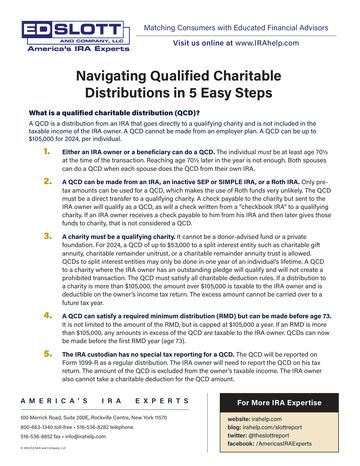
Navigating a QCD in 5 Easy Steps
How qualified charitable distributions work, and the five things to get right.
Read whitepaper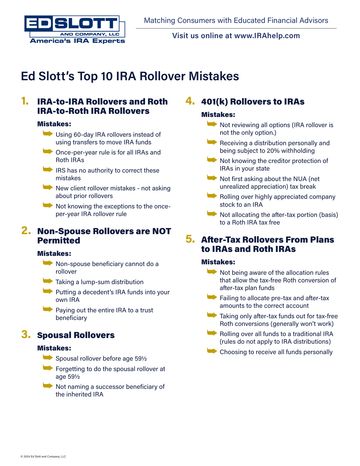
Top 10 IRA Rollover Mistakes
Ed Slott's ten most common IRA rollover errors, grouped by transaction type.
Read whitepaper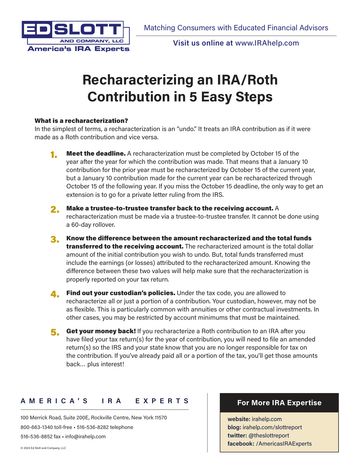
Recharacterizing An IRA/Roth Contribution in 5 Easy Steps
How to undo an IRA or Roth contribution, and the five things to get right.
Read whitepaper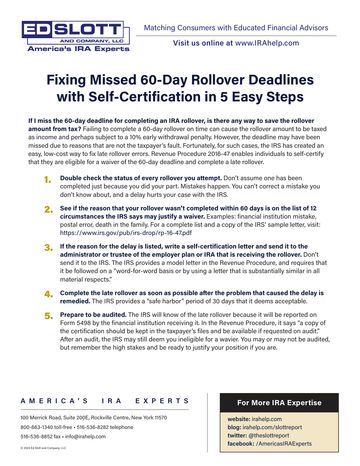
Fixing Missed 60 Day Rollover Deadlines With Self-Certification in 5 Easy Steps
How to rescue a late IRA rollover using the IRS self-certification procedure.
Read whitepaper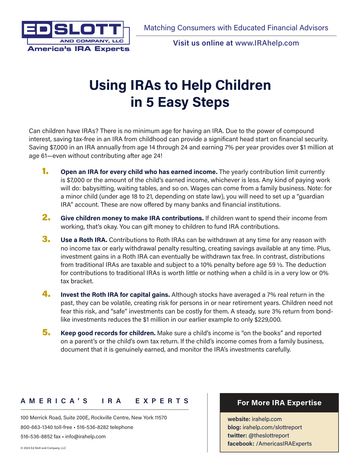
Helping Children with IRAs in 5 Easy Steps
How a child's IRA works and the five steps to give them a tax-free head start.
Read whitepaper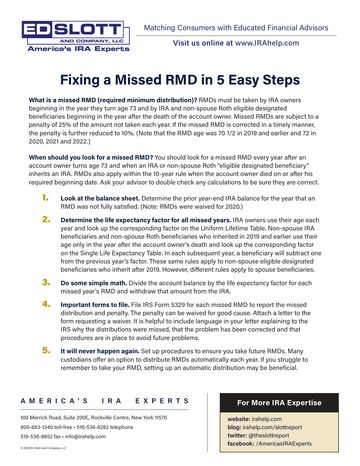
Fixing A Missed RMD in 5 Easy Steps
How the missed-RMD penalty works and the five steps to fix it and request a waiver.
Read whitepaper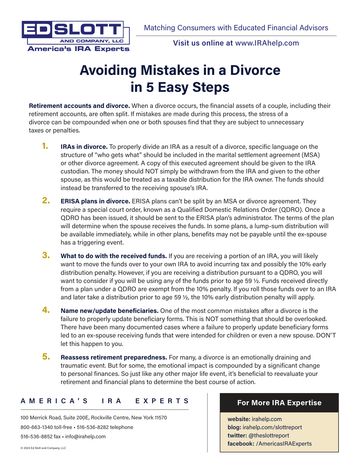
Avoiding Mistakes in a Divorce in 5 Easy Steps
How to divide IRAs and plans in a divorce without triggering unnecessary tax or penalties.
Read whitepaper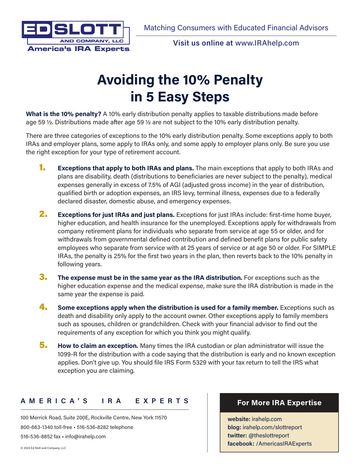
Avoiding the 10% Penalty in 5 Easy Steps
The exceptions to the 10% early-distribution penalty and how to claim them.
Read whitepaper
For more IRA information, feel free to explore our resources:
Frequently Asked Questions
The Ed Slott Elite IRA Advisor Group is a national organization that provides advanced education and ongoing training focused on retirement account planning, tax law, legislative updates, and IRA distribution strategies.
No. Retirement account planning is one component of comprehensive financial planning. Our participation in the group strengthens our knowledge in this area while allowing us to integrate IRA planning with investment management, tax planning, retirement income, estate planning, and charitable strategies.
Families approaching or living in retirement, individuals with substantial retirement account balances, business owners, executives, military retirees, and those planning to leave retirement assets to future generations often benefit from a coordinated approach to retirement account planning.

Reach out to learn if we are the right fit for your needs.
A conversation is the first step. No pressure, no obligation.
Schedule a consultation